The Product Management Accelerator is designed for career switchers and professionals advancing into senior PM roles. Over 4 months, you'll master end-to-end product leadership, build real products through capstone and internship, and gain the strategic skills needed to lead cross-functional tech teams. Graduate with a professional portfolio and direct industry experience
Morning Session: 8AM - 12PM WAT (GMT +1)
Afternoon Session: 3PM - 6PM WAT (GMT +1)
Thursday - 7PM - 9PM (GMT +1)
Morning Session: 8AM - 12PM WAT (GMT +1)
Afternoon Session: 3PM - 6PM WAT (GMT +1)
Thursday - 7PM - 9PM (GMT +1)
The Product Management Accelerator is designed for career switchers and professionals advancing into senior PM roles. Over 4 months, you'll master end-to-end product leadership, build real products through capstone and internship, and gain the strategic skills needed to lead cross-functional tech teams. Graduate with a professional portfolio and direct industry experience.
$400
Topics Breakdown
Week 1
Key Points
Product management involves the planning, development, and continuous improvement of products to meet customer needs and business objectives. A Product Manager defines the product vision, coordinates cross-functional teams, and guides the product throughout its lifecycle. They collaborate with designers, engineers, and stakeholders, while also distinguishing their role from Product Owners and Scrum Masters. Product managers address common misconceptions about their responsibilities and manage both digital and physical products. Their daily activities include strategy development, prioritization, communication, and decision-making to ensure the product delivers value and achieves organizational goals.
Skills Developed
Week 2
Key Points
Digital and physical products differ mainly in their development, distribution, and update processes. Product management oversees the entire product lifecycle, from idea generation to launch and continuous improvement, while the product development lifecycle focuses on designing, building, testing, and releasing the product. Agile methodologies provide flexible frameworks for managing this process, emphasizing collaboration, adaptability, and customer value. The Agile Manifesto outlines key principles that guide agile practices. Popular agile frameworks include Scrum, SAFe, and Kanban, each offering structured approaches to teamwork, workflow management, and efficient product delivery, alongside other supporting agile methodologies used by development teams.
Skills Developed
Week 3
Key Points
Product thinking, product sense, and product discovery focus on understanding user needs and identifying the right problems to solve before building solutions. Product analytics and pricing help product managers evaluate product performance and determine appropriate value for customers. Understanding customers involves user research, which includes different types and methods used to gather insights about user behavior and needs. Market research helps identify target markets, estimate market size, and uncover opportunities using various techniques and frameworks such as PESTLE and SWOT analysis. Competitive analysis is also important for product managers to evaluate competitors, understand market positioning, and develop strategies to stay competitive.
Skills Developed
Week 4
Key Points
Problem definition, ideation, and hypothesis formation are important early steps in product development, helping teams clearly identify problems and generate possible solutions. Frameworks such as Jobs-To-Be-Done (JTBD), the 5 Whys, and the Fishbone Diagram help analyze root causes and user motivations. Product teams must balance form and function while applying user-centered design principles to focus on real user needs. Tools such as user personas, behavioral psychology insights, Business Requirements Documents (BRD), user story mapping, and customer journey mapping help teams understand user behavior, define requirements, and design better product experiences that effectively solve customer problems.
Skills Developed
Maybe you’ve tried YouTube or a low-cost web development course. If you have, you know learning on your own can only take you so far. Humans learn best from other humans.
Ustack’s proven human-centric approach means you have a team behind you from day one.

Build software engineering skills faster with an expert in your corner. Your mentor will keep you accountable and give you an insider's view.

Get prepared for the job search. Your career coach will help you gain confidence and know-how to land the role.

Stay on track and achieve your goals. Your student advisor has your back and will keep you on track to graduation.
In this bootcamp, you’ll work on six hands-on mini projects and five full portfolio projects, including a capstone product you can proudly showcase. By the end, you’ll have an interview-ready portfolio that proves your skills to hiring managers—and sets you apart from the crowd.
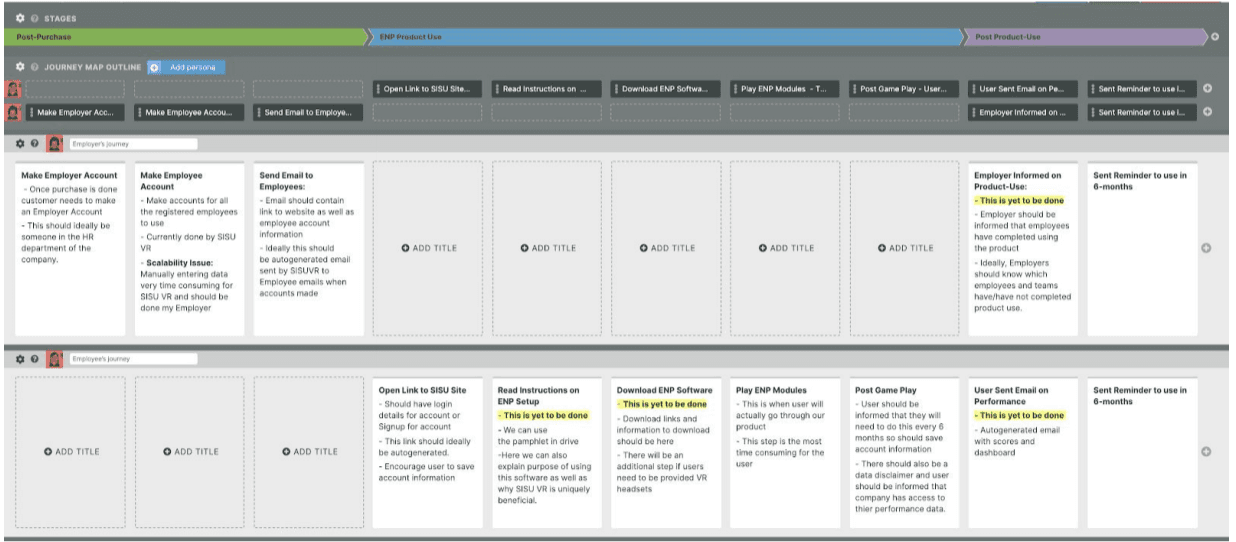
Effective Compliance Training with VR
While other companies use lengthy, monotonous compliance training, SISU VR’s product uses virtual reality to make this a more immersive and educative experience. They deliver compliance and prevention training with the competitive edge of Virtual Reality with immersive, realistic situations.
Product management Graduate


Product Manager - Opera Mini
Facilitator
Fractional Product Manager - ex-Cineworld Cinemas
Mentor
Product Manager, MBA - Unifonic
Mentor
Head of Product Delivery, Qore
Mentor
Data Analytics Instructor, Fairmoney
Mentor
Product Management Instructor, Heala Tech
Instructor
Digital & Growth Marketer Instructor, AJBell
Instructor